Find the blind spots.
Review entrances, perimeter areas, internal routes and existing image quality.

A security system for a working self-storage facility: better camera coverage, footage staff can search quickly, and alerts that go to whoever deals with them.
A busy site creates hours of footage. The job was to cover the gaps, make incidents quick to find and give staff a clear next step.
Review entrances, perimeter areas, internal routes and existing image quality.
Flag people, vehicles or movement that needs attention and reduce manual searching.
Send the alert with the clip attached, so staff or a monitoring team can act.
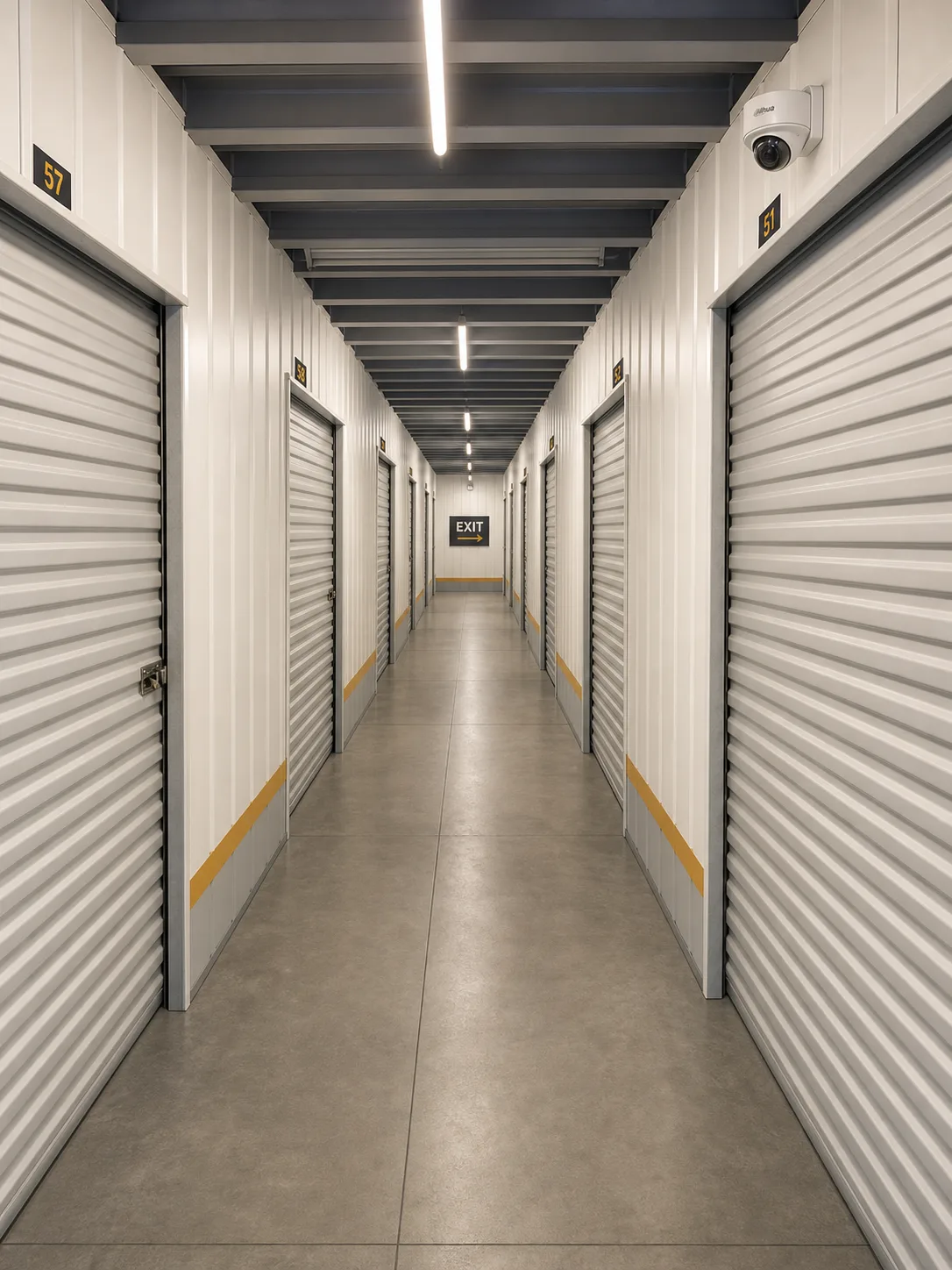
The client and site are not named, and camera positions and other operationally sensitive details are withheld.
Each zone below shows what the system detects there, without publishing camera positions or weak points.
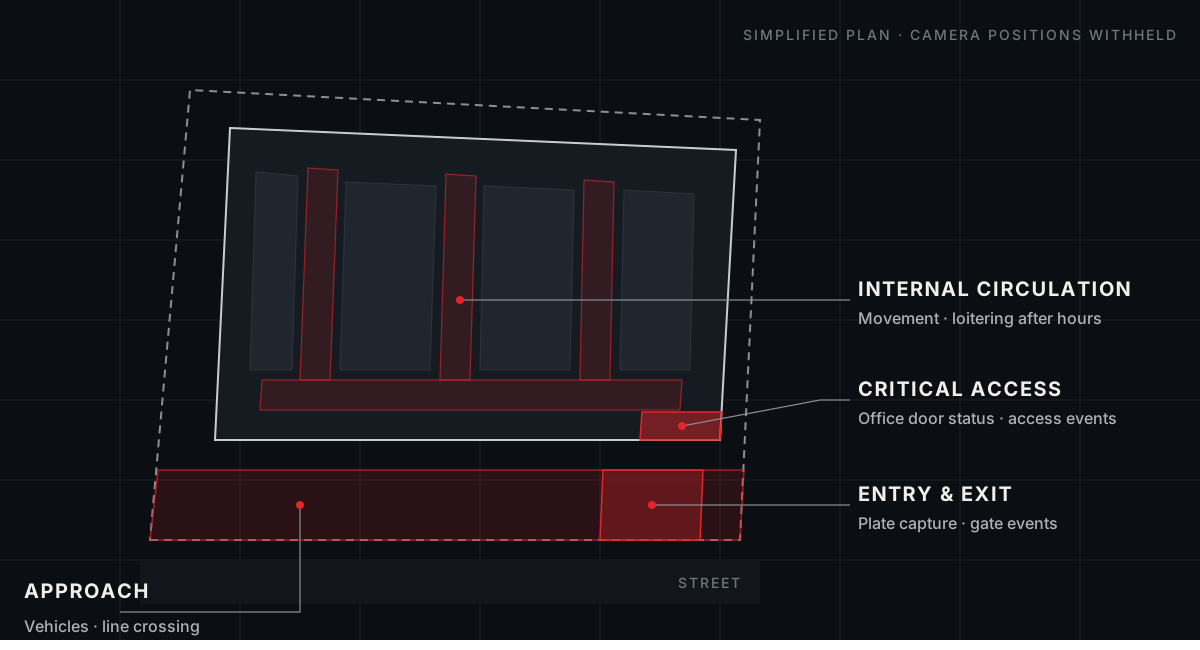
Each zone gets the simplest detection that does the job. The exact mix depends on the site, privacy requirements and operating plan.
These examples show what the platform can do. Which features a site uses depends on its cameras, licensing and privacy settings. Staff always review the result before acting.
Select a person in one clip and find matching sightings across connected cameras. Where alarm or access events are integrated, place them on the same timeline.
Describe what you need in plain English. Review the likely matches, open the timeline and export the verified footage.
Find a known plate, review entry and exit footage, and see each captured visit without scrubbing through days of video.
Examples are illustrative and use no real site data. Features depend on platform, licensing and integration.
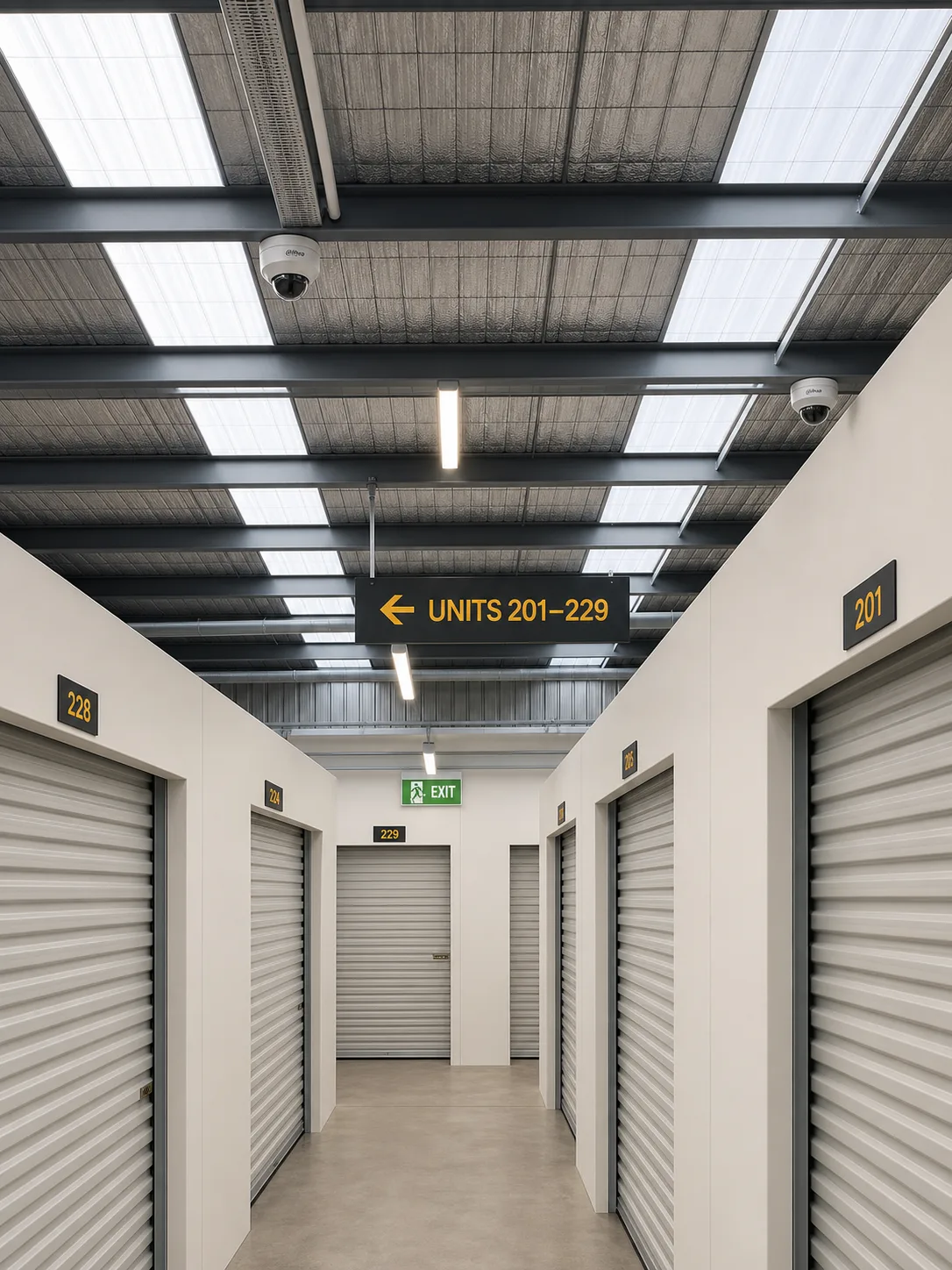
These are design visuals, not photographs of the installed site.
Six questions about the site. An indicative estimate before any contact details, then a security review if you want one.